
Home / Water heaters / Tank vs. heat pump
Tank vs. heat pump · Sonoma County
Tank vs. heat pump water heaters — which is right for your home?
A side-by-side comparison for Sonoma County homeowners weighing a standard gas or electric storage tank against the electric Navien NWP500-50 heat pump — real running costs at PG&E rates, upfront cost, rebates, and what each one needs to install.
consultation
The short version
Tank vs. heat pump, at a glance
A standard gas or electric storage tank next to the electric Navien NWP500-50 heat pump.
| Feature | Storage tankGas or electric | Heat pumpNavien NWP500-50 (electric) |
|---|---|---|
| Efficiency (UEF) | ~0.65 gas · ~0.92 electric | 3.85 — it moves heat, so it beats 1.0 |
| Est. annual running cost* | $555–$695 gas · ~$1,600–$2,000 electric | $370–$480 |
| Energy source | Natural gas or electricity | Electricity (240V) — all-electric |
| Hot water supply | Stored — can run out during peak use | 65-gal first hour, then recovers (50-gal tank) |
| Upfront cost | Lower — simple like-for-like swap | Higher — but rebates close much of the gap |
| Lifespan / warranty | 8–12 years (tank) | 10-year parts & tank warranty |
| Space & air | Fits almost anywhere | Floor unit (63″ tall); needs a spot ≥40°F with air around it |
| Install needs | Gas line + venting, or a 240V circuit | 240V / 30A circuit; pulls heat from the air (cools & dehumidifies) |
| Rebates | Little to none | Strongest — see the rebate finder |
| Best for | Lowest upfront cost, simplest swap, any space | Lowest running cost, max rebates, going all-electric |
| Bottom line | The heat pump is the cheapest to run and grabs the biggest rebates; the tank is cheaper upfront and simpler to install. Against an electric-resistance tank the heat pump is a runaway winner. | |
How each one works
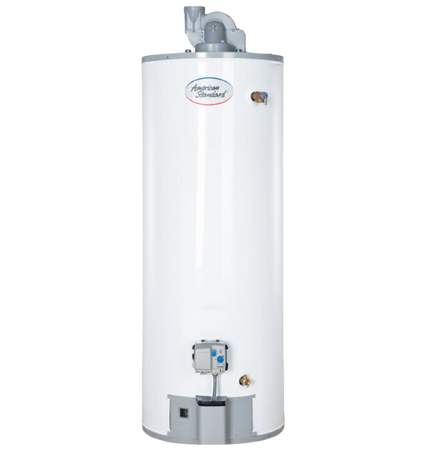
Storage tank — gas or electric
A storage tank keeps 40–50 gallons hot around the clock, ready to draw. A gas tank (~0.65 UEF) runs about $555–$695 a year for a typical Sonoma County home at PG&E’s ~$2.78/therm, and standby heat loss keeps burning fuel even when no one’s using hot water. An electric-resistance tank is efficient at the tank itself (~0.92 UEF) but runs on PG&E’s ~39¢/kWh electricity — which makes it the most expensive water heater to run, roughly $1,600–$2,000 a year for the same household.
Pros
- Lowest upfront cost — simple like-for-like swap
- Fits almost anywhere — no air space or warmth needed
- Familiar technology, straightforward maintenance
Cons
- Highest running cost — especially electric resistance
- Standby heat loss and can run out during peak use
- Shorter lifespan (~8–12 yrs) and little rebate money

Heat pump — Navien NWP500-50
A heat-pump water heater works like a fridge in reverse: it moves heat out of the surrounding air into a 50-gallon tank instead of making heat directly, so it uses far less energy per gallon. The Navien NWP500-50 hits a 3.85 UEF — about 3–4× the efficiency of a standard tank — with a 65-gallon first-hour rating, runs quietly (<45 dB), and has an electric backup element for heavy-demand stretches. Even on PG&E’s pricey electricity it’s the cheapest of these to run.
Pros
- Lowest running cost of any water heater here
- Qualifies for the biggest local & utility rebates
- All-electric — no gas needed
- Dehumidifies and cools the space it sits in
Cons
- Higher upfront cost (rebates help close it)
- Needs a warmish spot (≥40°F) with air around it
- A 50-gal tank leans on backup for big demand
What it really costs to run in Sonoma County
Estimated energy cost for a typical household — annual and over 10 years. This is the comparison where the heat pump actually wins on the bill.
Annual running cost
PG&E ~$2.78/therm gas · ~39¢/kWh electricity (2026).
10-year running cost
Same rates, no inflation adjustment.
Which is right for your home?
It comes down to upfront cost and simplicity versus the lowest running cost and the biggest rebates.
Go with a tank if…
- You want the cheapest, fastest like-for-like replacement
- There’s no garage or utility space with air for a heat pump
- You’re on gas and fine with a slightly higher bill for lower upfront cost
Go heat pump if…
- You want the lowest monthly bill — especially replacing an electric tank
- You’re electrifying, or want to capture the largest rebates
- You have a warmish garage or utility room with some air space

We’ll tell you which one actually fits.
The right answer depends on your home — what you’re replacing now (gas or electric), whether your garage or utility room suits a heat pump, your hot-water habits, and which rebates you qualify for. Simeone Plumbing, Inc. sizes and installs both, to California Plumbing Code, and gives you the honest trade-offs for your house — not a one-size-fits-all pitch.
- Straight math on running cost for your current setup
- Space, air, gas, and electrical checked before we quote
- Rebate guidance so you capture what you qualify for
- Fixed price approved by you before any work begins
- Licensed — CA C-36 #890196
Serving Santa Rosa, Petaluma, Windsor, Rohnert Park, Healdsburg, Sebastopol, and the rest of Sonoma County.
Water heater work, in our customers’ words
“Dominic replaced my water heater with a heat-pump model. Super clean install, great service, and a competitive quote — can’t ask for much more.”
“Simeone replaced our aging 75-gallon water heater. Domenic came out to review the project, the pricing was fair, and the city inspector said the work was done very well.”
“I needed my water heater replaced — they were quick to respond and got it done the next day, and the price didn’t break the bank!”
Tank vs. heat pump, questions answered
Is a heat pump really cheaper to run than a tank?
Yes — meaningfully. For a typical Sonoma County home it runs about $370–$480 a year versus $555–$695 for a gas tank (a ~$185–$215 yearly saving), and versus ~$1,600–$2,000 for an electric-resistance tank (roughly $1,200–$1,500 a year). It moves heat instead of making it, so it beats even an efficient gas tank on the monthly bill. The trade-off is a higher upfront cost.
What about the higher upfront cost — does it pay back?
A heat pump costs more to buy than a tank and needs a 240V circuit, so it’s a bigger upfront number. Two things shrink it: rebates (heat-pump water heaters get the largest ones) and the lower bill every month. Payback is fastest when you’re replacing an electric tank — the running-cost gap is huge and you may already have the 240V wiring. Against a gas tank the payback is slower but still real. We’ll run the numbers for your home before you decide.
Gas tank or electric tank — does it change the answer?
Yes. An electric-resistance tank is the most expensive water heater to run on PG&E’s rates, so swapping it for a heat pump is close to a no-brainer — the biggest savings and often the simplest wiring change. A gas tank is cheaper to run than electric, so the heat pump’s edge is smaller (but still there), and you’d be adding a 240V circuit and getting off gas. Either way the heat pump is the cheapest to run.
Where can a heat pump water heater go?
It needs a spot with some air volume and temperatures at or above 40°F — a garage or utility room usually works. It pulls heat from that air, so it gives off cool, slightly dehumidified air (a plus in a laundry room, less so in a tight heated closet). It’s quiet (<45 dB) but not silent. A plain tank has none of these requirements, which is part of why it’s simpler to install. We check the space during the free assessment.
Do I need new wiring to switch to a heat pump?
A heat pump needs a 240V / 30A circuit. If you’re replacing an electric tank you likely already have 240V at the water heater, which makes it an easy swap. Coming from a gas tank, we add the circuit and cap the gas — all checked up front and included in your fixed price so there are no surprises.
Are there rebates for a heat pump water heater?
Yes — heat-pump water heaters qualify for the largest local and utility rebates, and a plain tank gets little to none. The programs and amounts change through the year, so check what’s live right now with our rebate finder, and we’ll confirm your eligibility before you commit.
Not sure which water heater fits your home?
Get a free sizing assessment — we’ll lay out the honest options for your house.